Cheering for Life

Tags

, , , , , ,

As fairly small children, Sissy and I were exposed to the concept of cheering for a person, an event or a celebration beginning, as I remember, with the sound of basketballs bouncing on a wood gymnasium floor when Daddy played in the basketball church league during those early years. We couldn’t have been more than three and five at the time, yet within my memory bank, I see the gym, the risers, the crowd screaming and cheering,  and my father running back and forth across the court with the other players. Of course, we usually played with other children during the games, not paying much attention to the score, but consciously aware of the roar of the crowd, the screeching sound of rubber soles, the stop and starts of the players against the polished wood floor of the court. In concert with those sounds, the loud annoying buzzer sounded when a foul occurred, a timeout was called or a game ended.  

We graduated from the cheers of church basketball to the cheers of Elvis on the Ed Sullivan Show, the softball games in our back yard with neighborhood friends, the baseball fields of Evansville when BQ finally became old enough to play, the UE basketball games, and the football and basketball games of high school.

When I finished sixth grade at Hebron Elementary, the promise of an opportunity as a real cheerleader became possible with the continuation of my education at Plaza Park Elementary for seventh and eighth grades. They had a basketball team! They had cheerleading uniforms! They had pom-poms! What young girl doesn’t dream of becoming a cheerleader?

As seventh grade began, my newest best friends, Sally and Peggy, introduced me to this possibility and I immediately began my quest for recognition on the sidelines. Sports were not inclusive of young girls in the sixties so my option for participation was to be front and center on those sidelines. 

As tryouts were announced, I spent every evening standing in our small living room watching my shadow against the wall as I moved, jumped, split and came to a posture that emulated the practiced movements of the other girls I had watched enviously.

I don’t remember the exact tryouts, yet I am certain, I was nervous, anxious and possibly prayerful right up to the time of my tryout. I could do spread eagle jumps, the splits in both directions, and leg kicks just as well as any of the other candidates, and clearly articulate “Two, four, six, eight! Who do we appreciate?”

At that time, the focus was less on gymnastics and more on spirit, and I felt that my spirit and excitement hailed in the top percent of enthusiastic cheerleading capabilities. And yes, I did make the squad. I was officially an eighth grade cheerleader for Plaza Park Elementary. Along with Peggy, Mary Jo, Jane, Pam, Nancy and me. Ms. Simpson was our squad leader, but I will keep my thoughts about her to myself. 

Our outfits were simple black and white, skirts down to our knees, plain white Keds, white socks, a cotton shirt and a sweater with a large “P” and megaphone on the front. We were quite the team. OMG-look at those hairdos. Can you find me?

Plaza Park Cheerleaders Circa 1962-63

From grade school, I graduated to Freshman cheerleader and then Junior Varsity cheerleader. When it came time to try out for my senior year, more gymnastics were introduced to the cheering menu and the competition was tough. The best I could do in terms of gymnastics was a running roundoff. No flips in my repertoire. Most of us had been cheering for several years, and it was almost guaranteed that you would be selected if you had cheered before.  Or so I thought.

Our tryouts were in front of the entire school population from freshmen through seniors in the school gymnasium. Everyone had a vote. I took my turn. I jumped, I split, I posed and cheered as loud and enthusiastically as I could, finishing in a spread eagle jump into the splits with arms held high in a V for victory.  The winners would be announced the next morning in homeroom. While confident I had made the squad, nerves took over and I eagerly awaited the results. 

Jan, one of the other cheerleaders who had already been on the Varsity squad for a year, sat in front of me in homeroom. As the announcement came over the loudspeaker, I silently prayed I had made the squad. It was important to me, and I needed and wanted this recognition. 

After hearing the list and then listening to the names being repeated, I quickly came to the realization that my name had not been announced. I had not made the squad. Others in my homeroom congratulated Jan and no one looked at me. There was silence around me. Except for Jan. She turned around and with a soulful look on her face she mouthed the words “I’m so sorry.” I smiled and told her congratulations. My stomach was in knots as tears threatened to escape my eyes and I sat silently in disbelief and devastation. The bell rang, homeroom dismissed, and everyone stood to leave the room. I slowly came to a standing position, gathered my books and prepared to face an even bigger crowd in the hallways. Shaky legs, palpitating chest, a look of stoicism, I put on a brave face and made it thru the day; I took my sorrow quietly home to give my family the news.

Devastation for a seventeen year old can and often clothes itself in frivolous desires and wants, yet at the time, I did not feel this way. Being on the Varsity cheer squad was important to me, and I was devastated. Eventually, I would understand the true meaning of devastation and this disappointment would fade into the background with more important concerns taking priority.

To this day I remember Jan’s kindness toward me, and because of her gesture, I loyally watched her cheer through Senior year with a feeling of unspoken gratitude. 

Llife goes on and cheering opportunities continued for me; my son’s soccer and hockey games, my daughter’s tennis and swimming matches, my grandson’s baseball and soccer games, my own tennis and pickleball teams, grand slams at the bridge table, horse races and the underdog gray horse of the moment, great putts on the greens with Daddy. Cheering for specific sports teams kept me sane during the NCAA basketball tournament: Indiana, Purdue, Kentucky, Kansas, Butler, and Gonzaga: UGA football games, and surprisingly the Indiana University football team of 2025.

It has been many years since Harry Gonzo played for IU and the school went to the Rose Bowl. During this drought IU fans did not have a great deal to cheer about for IU football. As an alumni we expected the basketball team to soar to great heights under the tutelage of Bobby Knight and others, but never the football team. We are a basketball state. The SEC is for football greats. Yet here we are. IU ranked # 3 in the nation and scheduled to play Michigan State on this day. And in the Strange fashion, I will be there cheering and screaming at the TV knowing there are friends and family doing the same. Rose will be going crazy. Sissy will be a mess, not wanting to watch but wanting to know the score. BQ and Yordy will be following the game minute by minute. And Mother and Daddy-they will be there in spirit, telling their four Strange kids to cheer on—for sport, for humanity, and for life.

Go Hoosiers!  You can do it!

Mothers and Daughters

Tags

, , , , , , , ,

Mothers and Daughters

The warm, sultry breeze passed through the window’s metal screen as the soft whirring of the Sears Roebuck window fan lulled us into a drowsy state. Our chins rested on folded hands as we lay on our stomachs and looked out across the two feather pillows, pushed closed together, at the foot of the double bed. Head to head, my sister and I chatted quietly recapping the day’s activities and calamities; an afternoon at the public pool, skinned knee after falling on roller skates, and homemade popsicles melting down our chins in the heat of the Indiana summer. 

Hushed giggling mingled in between the childish conversation traveled from that double bed out through the screened window to where two silhouetted figures engaged in their nightly ritual of conversation, cigarettes and tea. 

Our parents sat with their backs to us and they struck an interesting pose on the expanse of the lawn bordered by maple trees, rose bushes and a home garden filled with tomato, cucumber, and watermelon plants. A solitary weeping willow stood in the middle of the lawn. A pair of Blue Jays nested in our willow every spring, and I can still see my Mother ducking her head when they flew directly at her in a vicious attack as she hung out the laundry. 

The moon was out that particular night and we saw the smoke curling upward in the lighted darkness from Daddy’s outstretched hand that rested on the arm of one of the two metal lawn chairs. These all-metal lawn chairs moved in minute degrees as the natural bend in the metal gave way to the rocking movements of its occupant. 

Daddy’s other arm, free from a cigarette, appeared suspended in space as his arm encircled the top of the lawn chair seated next to him—Mother’s chair. She wasn’t smoking these days because the new baby was due in October. It was 1957 and even though many pregnant women continued to smoke and drink, Mother had given up the habit. Instead of a cigarette she held the ever present tea glass, properly laced with ice, lemon and sugar against her rounded belly. 

In the shadows, we watched her hand move up to her mouth as the liquid quickly disappeared from the glass. Straining to listen to what our parents were saying, now and then we the heard the faint sound of ice being shaken in the glass, rattling against the other pieces of ice as well as the glass itself. Occasionally, we saw Daddy lean over and kiss Mother on the lips. My sister and I, embarrassed by the intimacy of such activity by our parents, buried our heads into the fluffy, feather pillows, and giggled uncontrollably in hushed strains of laughter. 

We never heard the exact topics of these nocturnal conversations between our parents even though we were always able to distinguish between the two voices. Both voices had a touch of a Southern accent, which was different from the Midwestern tone of most of our friends and neighbors. The words nine, five and fine were always pronounced with a change in the vowel sound which gave charm and character to their expression. Both parents were born and raised in Kentucky and most everyone in our family sounded similarly to them, yet it was my father’s voice, so deep and melodious, I always cherished. Even as an adult I found his voice beautiful. 

As the two conversations continued simultaneously, one from the bedroom and the other from outside on the lawn, my sister and I eventually drifted off to sleep never knowing exactly how long our parents remained outside talking. 

During the fall and winter months when the weather turned cold, a similar nightly ritual of conversation occurred in their bedroom next to ours. We lived in a small house and the sounds of their conversations drifted easily across the narrow hallway that separated the two bedrooms. These exchanges were different in that on occasion when my parents retired early my sister and I were included in the conversation. 

“Sudy?” Mother would call out from the bedroom, “Did you go to the bathroom?” She asked this question every night as I suffered from enuresis and almost nightly wet the bed. My parents never punished me for these nocturnal releases and never made me feel ashamed for my lack of control when sleeping. I rarely awakened from the cold dampness emanating from my pajamas and the sheets, and my parents believed I slept so deeply that even a full bladder would not arouse me from my semiconscious state. 

“Yes, Mommy,” I responded, silently praying I would make it through the night dry. At age six, I was embarrassed about the bed wetting and very much wanted the accidents to stop. They finally did, but not until I was ten years old. It was difficult enough being the second child of the eventual four, but being the only child who wet the bed, was a burden I didn’t wish to carry. 

Bedwetting aside my greatest childhood battle revolved around the sibling rivalry typical in most families. The competition came from my older sister. The red headed goddess, or so she seemed to me. The freckles and the curls and the rarity of it all, played havoc with my psyche for years. 

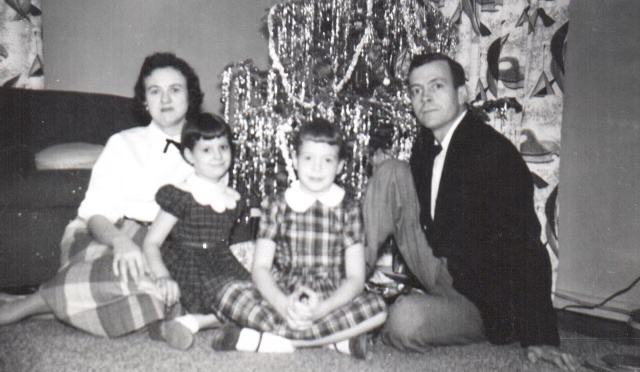
As toddlers only twenty-two months apart, Mother told us that people always noticed my sister first when she pushed our stroller down the street. 

“Look at that red hair,” people said, according to Mother. “Isn’t she adorable?” 

Being just the plain, dark headed child, I piped in with a cry or approximated word, begging to be noticed, “Look at me, look at me.”

I fought gallantly for recognition. Mother frequently declared that was the reason I was more social and extroverted than the redhead. 

I agreed with Mother’s astute observation, particularly when watching the old 8mm movies Daddy used to take of our family adventures. I was always front and center when the camera rolled while my sister would often hide behind her arms covering her face and rush out of the room escaping the humiliation she apparently felt at being photographed.

Santa brought the camera and projector around my eighth or ninth Christmas, and during that holiday my sister didn’t seem to mind the rolling camera. We hammed it up in amateurish style kissing each other under the mistletoe, dancing to Elvis Presley and showing off our new baby brother. The sounds of his crying and Elvis’ crooning were not heard by the audience at hand during the eventual development of the film and its later showing. There was no audio in that day, yet the laughter in our eyes illustrated the happiness in our family and the projections of love that flourished in our home. 

In the first clip we saw I remembered how Mother stood with one hip jutted out to the side with her opposite hand rested strategically on her waist. Her other arm hung at her side holding a beer can she tried to conceal from the camera’s view. She posed, she grinned, she saluted the audience. Mother rarely drank anything other than coffee or tea, so we stood and watched enchanted by this silly behavior and her funny poses. 

Mother was tall and thin and had long brown hair that highlighted the attractive grin that complimented her features. Her somewhat oddly shaped nose detracted slightly from her looks while that great smile gave her character and grace. Her teeth were straight except for the left lateral incisor which rotated slightly away from the front teeth and appeared crooked; actually it was crooked. My grandmother and my aunt, both on my mother’s side of the family, all touted that one crooked tooth; it was considered a treasured family trait. 

As I recalled Mother’s infectious grin and dramatic poses Daddy filmed on that Christmas,  I thought about the summer breezes again and remembered how we spent nights out on the back lawn watching old movies as we grew older and gained yet another addition to our family, rounding us out to four. 

As teenagers with two younger siblings, our father often sought ways to entertain the youngest of the four children. During those warm, summer nights when the steam off of the Ohio River drove everyone without air conditioning to the outdoors, Daddy invited the entire gang of neighborhood kids to watch the old movies. Silent and reminiscent of our childhoods, the actors were not the Katherine Hepburn and Spencer Tracy stars of the forties and fifties, but rather the four Strange kids and their loving parents, acting silly, ridiculous and dramatic for the translation of a happy family to celluloid film. 

Daddy showed all the movies, embarrassing us unmercifully and added insult to injury by serving popcorn and Kool-Aid to gain more viewers. Everyone camped out on our lawn bringing their chairs and blankets to enjoy the antics on the screen. The kids laughed uproariously and threw popcorn at each other. The parents chatted quietly with each other, and the smallest children soon fell asleep on their parents’ laps while the evening entertainment continued. 

Daddy continued to show the old movies each summer as the crowds eventually grew smaller, and my sister and I left for college, and the old camera and projector went out to pasture leaving the responsibility of summer entertainment for the kids to each family. 

Prior to the retirement of the cameraman and his crew, those post-adolescent and pre-collegiate years brought the death of innocence to my sister and me. We realized our parents were not perfect and were even quite embarrassing at times. I thought Daddy smoked too much and Mother was never around when I needed her. She rarely came to watch me cheer my high school football and basketball teams on to victory, and she never gave me any good advice about boys. We fought and argued and generally made nasty, irretrievable comments to each other. Mother slapped me in the face once, and I told her I hated her. I had obviously hurt her feelings or reminded her of her own difficult mother-daughter relationship, but I didn’t care. She never loved me quite the same as she loved my older sister or younger brother. My older sister and the male heir apparent were her favorites, not to mention my baby sister who came later. I was just the second child—the one in the middle. 

I didn’t care that Mother had to work with four children at home to help support the family when Daddy was injured at work requiring surgery and a long painful rehabilitation. I didn’t care that she came home at night and cried herself to sleep. I didn’t care that she was in emotional pain. I was eighteen, and I was angry she wasn’t the kind of mother I wanted or needed. I went to college to find my own way and leave this life forever. I never wanted to be like my mother, and I certainly didn’t want to look like her even though everyone always said I did. I angrily told myself there was nothing about her I admired, while knowing privately those sentiments were not true. For the time being I was on my own and off to college. I enjoyed and explored my newfound independence from Mother. 

That was more than twenty years ago. It is January 1990. I have two children of my own, and I have finally realized the difficulties of being a good parent. My older sister and I talk frequently on the phone and analyze our childhood and wonder if it really was that strange growing up. She always says, “Do you remember…?” and when I say no, she gets annoyed and tells me I have forgotten everything. I just laugh and tell her I’ve blocked all the painful memories and only remember the very best moments. She reminds me it’s time to forgive Mother and love her for herself. I tell her I already have. The conversations continue and we finally tell each other “I love you” and say “Goodbye.” We go back to our very different worlds and I don’t think about Mother for a while. 

Today, I am back home in this house I left years ago, and I am home for a very important reason. 

As I sit in this small room filled with memories and pictures of laughing children, the whirring sound of the old projector fills the silence of the room. The solitary light on the top of this metal relic displays a cone-shaped beam from the projector as the visible flecks of dust move upward through the air, reminding me of smoke curling upwards from the cigarette held by hands so familiar to me.  

Images appear on the portable white screen positioned in front of me and the projector. I remember that day. Surrounded by the near silence of the moment, two little girls, one about ten years of age and the other about eight, step out of the house holding the hand of a small boy between the two of them. One of the girls has red hair and the other has dark brown hair. The boy, with his impish grin is blond. They are beautiful children. The girls are wearing matching dresses with pink tops settled below the waist, finished off with pink and white striped skirts. The girls’ hair, pulled back into curled ponytails, are tied into a bow by a pink and white striped ribbon. 

I remember those dresses. Mother made them for us that Easter as she had done many years before and after. My sister had hated the color of the fabric because of her red hair, and even so, Mother used that fabric because I had liked the color pink. 

On the screen, I see Mother come out of the house dressed for church. She stands behind the three of us waving and smiling with that special grin of hers. The four of us wave simultaneously  as though cued by the invisible cameraman; it is Daddy of course. 

My sister, in her usual fashion, turns her head away from the camera and puts her hand to her face and runs back into the house. Laughing, I think to myself, she always did that when she didn’t want her picture taken. I, on the other hand, stand there smiling widely, begging to be noticed. Look at me! Look at me!

In that moment, I gulp in shame for all the times I said I hated my mother as I see in my own smile a very familiar face. 

“What are you doing honey?” Mother’s voice interrupts my private thoughts as she turns on the lights and enters the room. Flipping off the switch to the projector, the light goes off and I stand up and look very closely at this face I have known for almost forty years. Mother is sixty-four years old and to me she looks much the same as always. She is heavier now and the skin on her face has started to age, yet she is still here with us—my Mother. 

“Are you ready to change the dressing?” I ask, composing myself for this arduous task I have been mentally preparing to tackle. 

“I don’t know,” she replies nervously. “I don’t know if I can look.”

“Mother, you don’t have to look if you are not ready, but I think we should do this before Daddy gets home. He’ll just upset both of us, and then we’ll be in a fine mess,” I laugh hesitantly trying to remain calm. “Come on,” I continue encouragingly. “It won’t be so bad. I promise.”

I escort Mother back to her bedroom, and I pray for total control. I have seen the ravages of a mastectomy before, but this is my Mother. I steel myself for the next moments and again call upon every bit of strength I have to get through this without falling apart. 

With her back to the mirror, I carefully slip the robe from her shoulder and chest. The bruised and swollen area on her chest where the surgeon had done his deed lay before me. I gather my courage. “Mother, really, it’s not so bad. Do you want to look?” I ask softly. 

She slowly lifts her face as I turn her toward the mirror. Inspecting herself in the mirror, she flashes a grin and bravely states, “You know, I never planned on winning a beauty contest, but I guess I’m out of the running now.” 

Her somber courage and usual sense of humor makes me laugh quietly. With tears in my eyes the two of us look lovingly at each other in the mirror. As I continue to look at her image, I finally realize her greatest gift to me, her second daughter; the one with the dark hair; the extroverted middle child; the one who thought she loved me less than all of my siblings. 

The two expressions in the mirror are almost identical. Both sets of teeth are straight except for the left lateral incisor at the top of the smile. The tooth rotates slightly away from the front teeth and appears to be pointing in the opposite direction. In the reflection, now blurred by tears, I see this wondrous pair of crooked, beautiful grins. 

With love, I hug the unassaulted side of her chest and say quite simply, “Thank you for my smile Mother. Thank you for my beautiful smile.” 

Dedicated to the woman who gave me this life and taught me how to be brave, smart, loving and funny.

Jean Proctor Quirey Strange-My Mother

April 29, 1925 to November 22, 1990

In Remembrance-Veteran’s Day

Tags

, , , ,

My siblings and I were born after WWII and as young children we never knew or understand the real significance of the war to our father nor to the country he defended. It was not until we were older that we grasped its import to yesterday and today’s world.  While studying history in school, reading books about the war, viewing documentaries or watching movies, our education of this event grew exponentially as we grew older. We rarely heard our father’s very personal stories and experiences; he shared few. 

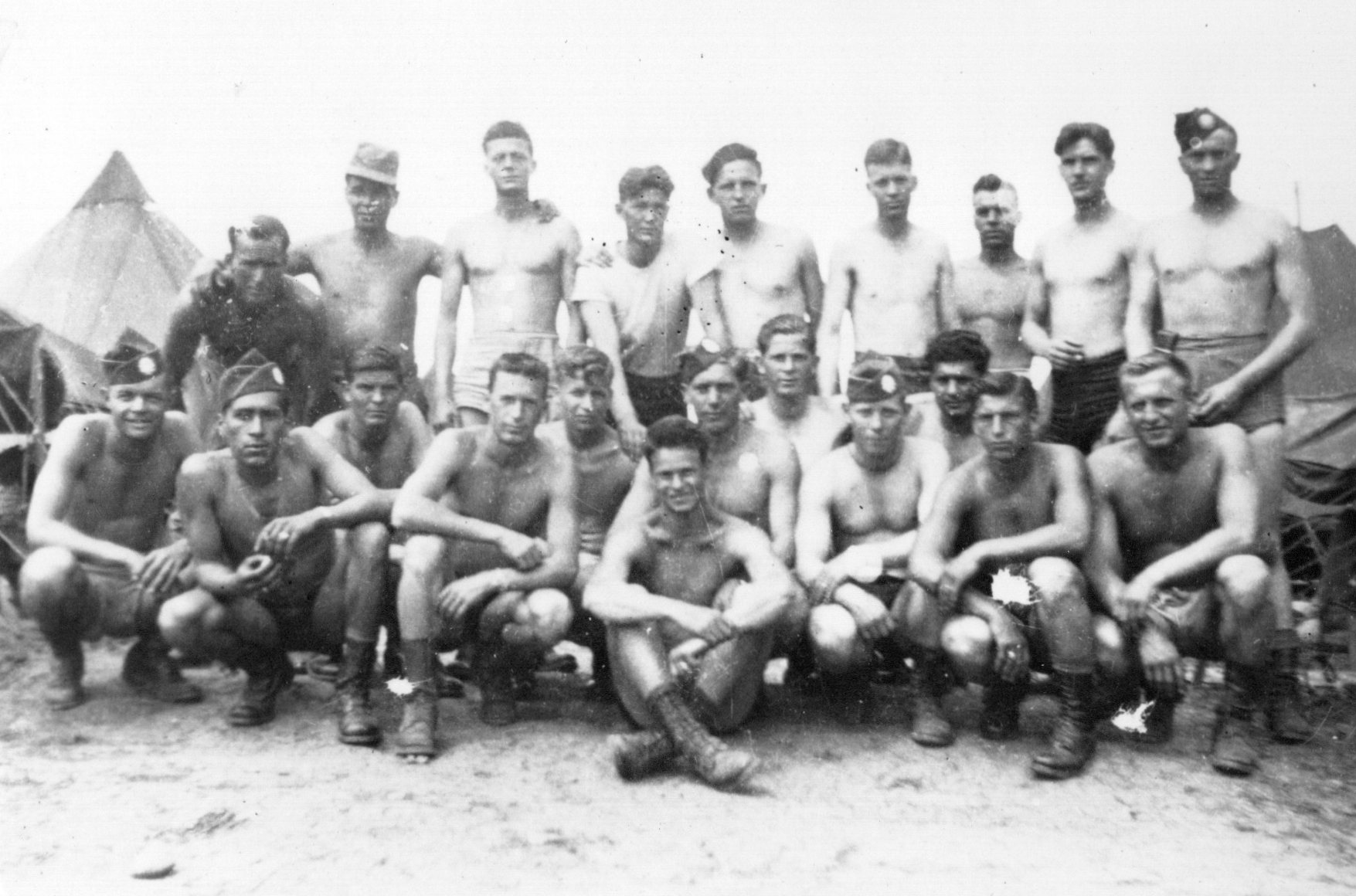
We knew he was a paratrooper with the 513 Parachute Infantry Regiment of the 17th Airborne Division. He earned a Purple Heart and a Bronze Star. The 17th Airborne Division, known as “The Golden Talons-Thunder from Heaven” activated on 15 April 1943 after training at Camp Mackall, North Carolina. The Division was under the command of Major General William Miley, and they arrived in the United Kingdom on August 24, 1944. Our father was nineteen years old. 

As a young soldier he participated in the Battle of the Bulge in the Ardennes Region of Belgium. Winston Churchill referred to this as the “greatest American battle of the war.” On December 23, 1944, the division was flown to France by emergency night flights and moved to an area near Rheims under the command of General George Patton’s US Third Army. On Christmas Day the division was ordered to take a thirty-mile defensive position running along the Meuse River near Charleville, France. The 17th Airborne Division also participated in Operation Varsity, during which he and fellow soldiers were dropped behind German lines near the town of Hamminkeln, Germany. The orders were to capture the city. 

We knew he encountered Nazis and most probably killed or wounded some, but he never discussed that part of the war. Once when I was older he quietly described what happened to paratroopers who landed in a tree-alive or dead-and were discovered by Germans. The details were scarce, the horrors were loud and clear. 

We also knew he had a war trophy because he showed it to us. War trophies were common then and included many items, both legal and illegal. Soldiers were allowed much leeway in taking home property that belonged to the enemy. Today, there are strict rules in place regarding war trophies.

His war trophy was a large Nazi flag with a large Swastika in the middle. He either secured it after liberating or conquering a city. We do not know. As children we would drag the flag into the living room, spread it out over the floor, and jump up and down on it screaming “Bad Nazis, bad Nazis.” My memories of this are somewhat vague, but I do remember the size and the stark brightness of the flag’s colors. I understood, while somewhat naively, that Nazis represented evil and unjust crucifixion against people who were different; to this day the hatred by Nazis continues and is still seen across the world in the news and other digital communications invoking a shock wave similar to that which traveled throughout Europe and the West under Hitler’s reign. 

Eventually our father  donated the flag to the Evansville Museum of Arts and Sciences, which sat on the banks of the Ohio River in downtown Evansville. I remember seeing it once on display with other items from the war, but it is likely no longer on display. After he earned an Honorable Discharge, he came home to Kentucky, married our mother and began a family. In the early 50s he moved to Evansville to raise a family. He had four children and five grandchildren. Today he has six great-grandchildren he never met. He would have loved each and every one of them. 

For the rest of his life, he chose to never fly in an airplane. On Father’s Day in 2012, his son BQ, and grandson Evan, jumped from an airplane with parachutes-in-tandem to celebrate Father’s Day and honor his memory. My brother jumped with a picture of our father in uniform in his pocket as he skydived into the clouds. My brother described it as one of the most amazing events in his life because he was with his father on the way down to earth. 

Unless you stand in the shoes of a soldier, you cannot possibly understand the motivation to be a soldier, the loyalty, dedication, and strength it requires to be one, nor the pain and suffering endured during and after combat. On this Veteran’s Day, let us remember those who have sacrificed their lives through service or death. Thank them for their service, as we thank our beloved father for his. Always in our hearts. We hear your “Thunder in Heaven.”

Sissy, Sudi, BQ and Yordi.

In Honor and Memory of Pvc. Allen Reid Strange

513 Parachute Infantry Regiment of the 17th Airborne Division. 

Born February 3, 1925-Died April 21, 2005

80 years old 

Shaving somewhere in the Ardenne Region of Belgium

Third from left, top row

Pvc. Allen Reid Strange

Dr. Howard, Dr. Fine, Dr. Howard!

Tags

, , , , , , ,

Slapstick humor by classic comedians like Abbot and Costella, Laurel and Hardy, the Marx Brothers, and the Three Stooges regularly entertained us in the fifties after arriving in Hollywood, years before, when it was called vaudeville. Through the unsophisticated, low resolution cinematography of black and white, the humor of these comedic pioneers came to life on the big and small screens across the country as we witnessed the emergence of entertainment preserved on film. 

In our home, we grew up loving the Three Stooges and often memorialized their skits in our own reproduction of the bumps, falls, head slaps, near eye pokes, accompanied by the cacophony of sound effects which flowed in their rapid-fire dialogue. Who could forget the newly arrived physicians at the Los Arms Hospital—snicker, snicker—and the relentless call to duty, which resulted in chaotic scrambling, bumping, and maneuvering across the screen? The call to service, “Dr. Howard, Dr. Fine, Dr. Howard!” was the trademark of that particular schtick. 

As children we often missed the subtlety of the adult humor embedded in the jokes and the choreography of their harried antics, and even though we knew that Shep, Curly and Moe were not real doctors at the Los Arms Hospital, we laughed. The Three Stooges were about silliness and fun, and the “going to a real doctor” was about measles, mumps, chicken pox and polio. While the Three Stooges were carrying on up on the big screen, the possibility of a communicable, debilitating illness stared directly into the faces of children in the fifties.

Each summer as children celebrated their escape from the routine of school, parents experienced a renewed fear of a polio outbreak. Polio was one of the greatest public health crises in history since the end of WW II, and parents anxiously watched for any telltale signs of the disease with the advent of the summer and its rising heat. 

The common fear about public swimming pools and other gathering places for children was not unfounded. In 1952 alone, there were nearly 58,000 cases of polio reported in the United States. Our very own mother was terrified of polio because she had two young children, and polio was very real to her. 

The threat that resulted in that fear actually lived across the street from us in the form of Mike, a young adolescent who lived with his parents—a victim and survivor of polio. While Sissy and I roamed the neighborhood on bikes or skates, Mike struggled to walk from the front door of his house to the street’s curb to catch the school bus. There was no bike for Mike. He did not roller skate down the sidewalks laughing and enjoying life with the rest of us. He didn’t run with us when we played tag, hopscotch, kickball, or hide ‘n seek. He was older than most of us, but even so he was probably only about twelve years old, and even at that young age, a lifetime of disability awaited him. His sandy red hair and wire-rimmed glasses already made him stand out as someone who was different, but it was his uneven gait that plainly told of the difference between him and the rest of us. He was only able to walk with the aid of metal crutches that encircled his upper arms while his hands rested on handles positioned halfway down the crutches. He bore the full weight of his small and twisted body on those two arms and hands. Both legs were atrophied and deformed. One leg dragged behind the other as he pulled the opposite leg in front of the other in an alternating pattern as he maneuvered the sidewalk to the driveway or curb. We usually saw him by himself, or with his parents, but he occasionally traveled across the street to just say hi. I was only around five at the time, but I was vividly aware of the impact polio had on his body. I recall very little else about Mike. His family lived in that house across from us throughout my childhood and with the exception of an occasional wave of the hand, contact with the family was minimal. In retrospect, I can’t help but wonder if fear dictated the distance between the two families. 

Sometime in the 50s, after Jonas Salk perfected his vaccine following clinical trials involving more than one million children across the globe, Sissy and I lined up for our doses of the miracle drug at our pediatrician’s office. Dr. Lynch was an elderly white-haired physician sporting wire-rimmed glasses. He wore a white lab coat with his stethoscope conspicuously wrapped around his neck. His office was located in one of the old Victorian houses that still exist today in the historic downtown area of Evansville. 

A portion of the downstairs living space was converted to an office and exam rooms. In the waiting area, underneath the stairway to the second floor, a small playroom was outfitted with a small solid oak table surrounded by child-sized chairs. Geometrical wooden blocks lay on the table, on the floor and in a box next to the table. Wooden puzzles and books also graced the small book shelves lining the walls of the cubbyhole. While we played, Mother sat in the waiting room reading a book allowing us to be distracted by play prior to our visit with Dr. Lynch. There was no oral option for the polio vaccine at that time and the hypodermic needles of the time were not small—anxiety in place—and trypanophobia in tow. 

Whether or not Dr. Lynch was a visionary is hard to determine because in the fifties, people lined up to ensure their children were vaccinated regardless of the risks of the vaccine. Some parents reacted with hesitancy just as they do today, but most parents understood the devastating effects of polio, and it was not a life that parents desired for their children, or themselves. The value Jonas Salk brought to the world back then was heralded as almost hero-like in nature because he brought a promise of hope to parents throughout the world. Across the globe today, the complete eradication of polio is in the very near future because of Jonas Salk and others. 

In remembering sandy-haired Mike with the wire-rimmed glasses struggling to walk and not being able to experience the typical joys of childhood, I can’t help but think that Jonas Salk was actually a hero and a savior. Certainly not for Mike—Salk’s discovery came too late—but certainly a savior for the millions who have received the vaccine since April 12, 1955, when news of its success became public. 

Perhaps another savior will take Salk’s place and he or she will find a cure for Autism. Perhaps HIV will be eradicated because a new vaccine will be discovered. Perhaps a cure for Multiple Sclerosis will be the next greatest discovery and those with the disease will be relieved of the “not knowing.”  Whatever transpires in the world of scientific discovery, we will owe that success to the dedication of scientists, physicians, researchers across the globe. We will not owe anything to the likes of Dr. Howard, Dr. Fine, or Dr. Howard or other actors of the stage. 

Remember the Three Stooges only as they were and are meant to be remembered—merely entertainers; actors looking for an audience; performers hoping to get a reaction. Honor the true heroes of science and medicine in your academic medical centers, at the community hospital, in the physician’s office, at the urgent care centers, in the ambulance, in the pharmacies, and anyplace else where the true scientists and healthcare providers practice “for real.”  

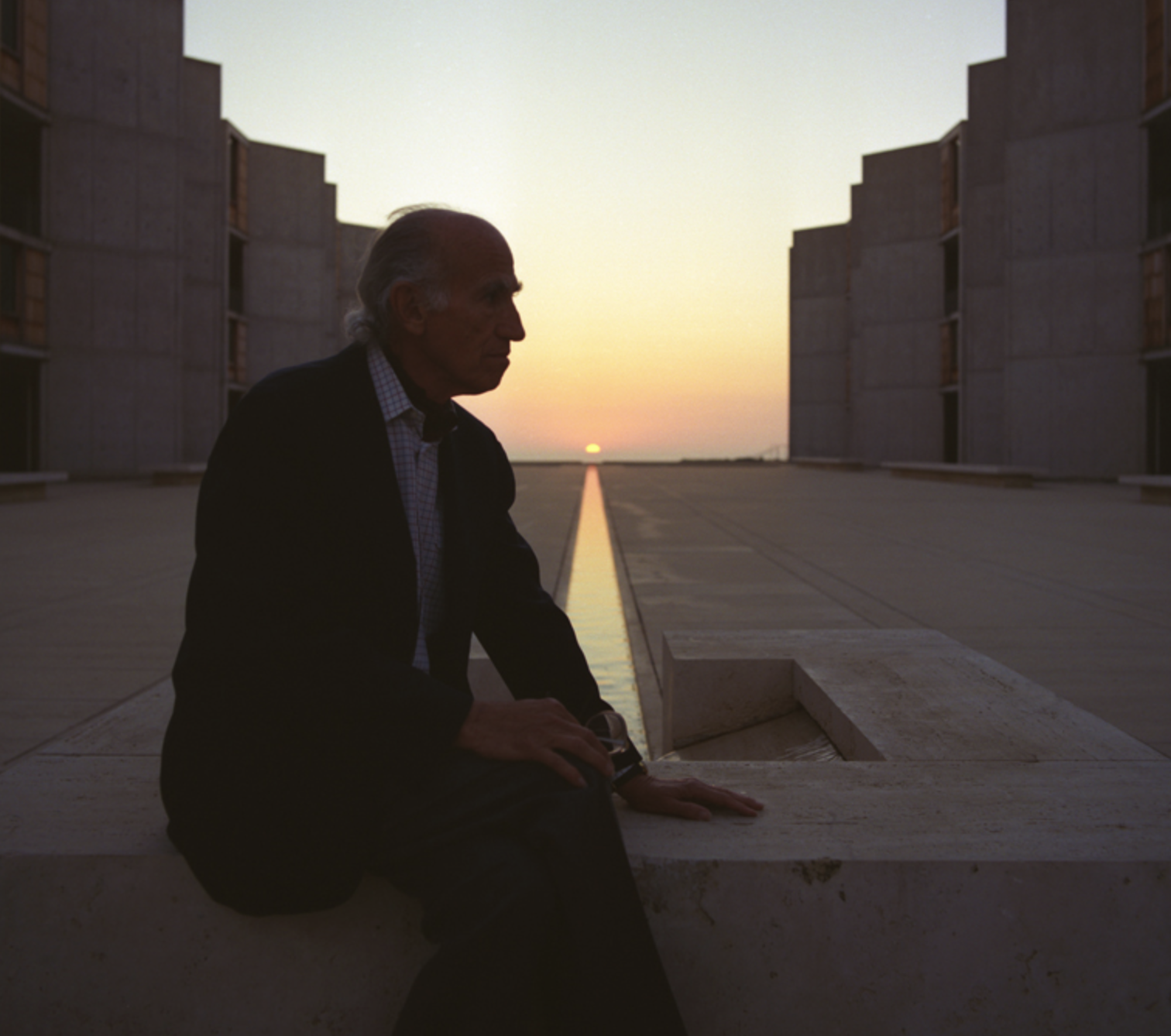
“Salk spent his last years searching for a vaccine against AIDS. He died on June 23, 1995 at the age of 80 in La Jolla, California. His life’s philosophy is memorialized at the Institute with his now famous quote: “Hope lies in dreams, in imagination and in the courage of those who dare to make dreams into reality.”

Big Orange

Tags

Big Orange

Remember when fresh milk and bread were delivered straight to your house by a real person in a large, branded truck? This custom of making that personal delivery began long before cars and trucks were invented by way of the horse and buggy. And, up until the 50s and early 60s that custom continued. As so many ways of doing business rapidly changed during the middle of the 20th century, the personal delivery of goods became a thing of that past. With the transition to larger and well-stocked grocery stores, the demise of the old bread truck was inevitable. 

But then there was Big Orange. And its owner. And a group of teenagers who just wanted to have fun. 

We were 16 or 17 at the time. It was 1966-67, and Evansville was an average sized, Midwest town, with the usual activities and adventures for teens. Not exactly a thriving metropolis, but rather a quainter town with good middle-class values. 

Football games, basketball games, the Surf Club on Green River Road, McDonalds, the Armory on Sunday night for dancing, the drive-in movies. We would often meet in these locations and spend the night cheering, dancing, talking, eating, making out and just being average teens. Parents dropped us off at our intended destination, or a girlfriend or boyfriend with a driver’s license would pick us up and serve as the group’s driver for the night. There were never more than four or five of us in a car. No SUVs in those days and no one wanted to drive their parents’ station wagon. Just ask Dorothy. No thanks, L.A. and Marjorie, Dorothy liked to drive her green MG-only one other passenger allowed. 

But then there was Big Orange. Big Orange was a retired bread truck owned and operated by our friend Dwight. Tall and impressive with an engaging smile and a curly top, we put our trust in him as he guided us through our years of mischievous fun. 

And there were always more than four or five of us. 

In that truck there was always Bonnie, who later married Dwight, and Don and Martha; Jimmy and Dorothy; Me, of course; Jack, David, Jenny and John; Mike; Rosie, too; Becky, Sally, Robert, Ron, Jon and Mary Jo-I’m sure; and so many more that I can’t even begin to remember everyone who shared in our adventures. 

We would meet up someplace where we could leave our cars-maybe the high school parking lot, or the Frisch’s Big Boy, or another designated spot. Dwight would pick us up and off we would go. I don’t recall seat belts, and I don’t remember if there were even any seats, but there might have been these straps to hold onto while riding. Anyone remember?

Off to the cemeteries we would go to round up the spirits, and to perhaps drink a few underage spirits as well. Yes, there was drinking, and smoking. I for one confess to that “inappropriate behavior.” There were also loads of mischievous fun. Rolling houses with toilet paper was very popular back then. Imagine what you could accomplish in a shorter period of time with 10 people doing the deed, rather than two or three. Safely in and out, and quickly-that was the goal. Rolling a house was not necessarily done for spite or revenge. Sometimes we did it to just say “We like you! Ha! Ha!” 

The egging episodes were a little different. Generally reserved for Halloween, of course. We had all outgrown trick or treating, so going out on Halloween night to egg “your friends” was a whole different level of mischievous fun. I do remember one Halloween when the boys were in Big Orange and some of the girls were in Dorothy’s parents’ station wagon. We certainly wouldn’t go out egging in the MG. Needless to say, the boys slaughtered us with the eggs. We were outmatched and outrun, and we had to return an odiferous, rotten, egg smelling station wagon back to L.A and Marjorie. They were not happy. 

Riding in Big Orange wasn’t all about mischief though. It was about being with friends laughing, sharing memories, and spending time together. We were never stopped (or caught) by the police for breaking any laws, we kept curfew, and Dwight safely returned us home to our parents. 

I hadn’t seen Dwight in many years. Probably not since the last reunion in 2000. He married his high school sweetheart; Bonnie and they remained in Evansville, later Newburgh, and raised their family. I left Evansville for college and life in the big city. He passed away this week, and as I heard the news from old friends across the country, I couldn’t help remembering what fun we had in that big orange bread truck, and how many of us hold those memories in our hearts. 

When I searched for his obituary online and saw the picture accompanying the many kind words describing his life, I was reminded of that tall, impressive boy of 16 with the curly top and the engaging smile. Time only made both more special. I hope that he is resting in peace, and his family is comforted by the many great memories he gave to all who knew him then and throughout his life. 

In Memory of Dwight Rounder

February 1, 1950 to March 14, 2021

As remembered by Sassy Strange 

First Job-Lasting Memories

Tags

, , ,

Scanning my annual social security statement, I think back to my first official, “paying job.” Well actually, my first paying job was as a babysitter for children in our neighborhood, at a rate of 50 cents per hour.  My real, official, social security card required-job was detasseling corn. For those of you not from the Midwest, this is a “thing,” and still exists today, although it is a more sophisticated industry than that which we experienced back then.

There were four of us—Sissy, Anne, who was Sissy’s best friend, my friend Jenny, and I. We signed on to detassel corn after Anne’s father arranged for us to work for a local seed company during the summer. The company was about 30 minutes from our hometown of Evansville, which meant we needed to commit to getting up very early and heading down the road before the sun had barely peeked over the horizon. The best news of that summer job was that it paid 85 cents an hour, which was a far cry from babysitting wages and dirty diapers. The better news was, if we stayed on-board for the entire detasseling season, we received a bonus, and that sounded like a great deal.  

Mother prepared bag lunches for us every day, which more than likely consisted of cherry preserves on white bread with margarine wrapped in waxed paper. This “not so healthy” concoction was a typical lunch staple for us whether it was camp, school or detasseling corn. Easy to prepare and inexpensive. There may have been chips, fruit or Hostess Twinkies in our lunches, but am  certain that no sandwiches made with mayonnaise would have made the list. Mother was very particular about unrefrigerated mayonnaise. That is a different story.

Regardless of what was in our lunch bags, we were pumped for this adventure. More money, out of the house all day spending time with friends, and the potential to yes, meet boys. This job was for all takers regardless of gender, and we would be joining a group of teens from across the area. Hopefully we might have a boy or two on our crew. The real goal was to make it to the end of the season-whoever was part of our crew-and collect that bonus. Needless to say, we didn’t know what was ahead of us, nor that the attrition rate for dropping off was fairly high, and the ability to stay onboard the entire season had its challenges.  

Let me count the ways Elizabeth Barrett Browning!

 We had no choice but to get out of bed before the sun came up in order to ready ourselves for the early morning commute. Our parents were on carpool duty because we weren’t old enough to drive, and they gladly rotated that responsibility between them.  The  four of us, with lunches and water in tow, scrambled into our ride for the day and made off down the road to the cornfields of southern Indiana and whatever awaited us.

For those of you who don’t know what detasseling corn entails, the best explanation I can give is that it  helps in cross-pollination of seed corn to produce hybrid seed corn. We were tasked  with removing the tassels, which is the male part of the corn stalk, and then throwing them on the ground, so that they could not pollinate with the female part of the corn, which sits lower on the stalk. Every other row was detassled to allow for this  process. I’m sure you totally understand now. If not, you can find a video on YouTube further explaining the process. Isn’t the digital world grand?

On our first day, we were assigned to a crew, which included the four of us, several other teens, and a supervisor. The supervisor drove the “tractor-of sorts” riding down multiple rows of corn at a time. We stood in metal baskets which stood level or just below the top of the stalks. Two of us were assigned to each basket and as we drove through the rows, we pulled the tassels out and discarded them quickly in order to not miss that next corn tassel. It was as simple as that.  

The weather was hot and humid, and the work was grueling and hard, yet it was also fun. We acquired a bit of perseverance along the way , a lot of patience, and new friends.  No smartphones, no iPods, no luxury. We worked a full day and usually left dirty, dusty,  tired, thirsty and hungry. I imagine at some point during the drive home, one or more of us fell asleep leaning onto the shoulders of one another.   Staying up too late at night was not an issue. We were exhausted.  

That was the routine on sunny days. On days that it rained or after a night of drenching rain, we walked through the fields on foot. No one told us we would have to walk through muddy corn fields, with a level of heat and humidity that enveloped and stifled us. Pull down the stalk, pull out the tassel, swipe away the bugs, and try not to cut your hands, arms and legs on the sharp corn leaves filling the small spaces between the rows. These were the worst days of the summer.

My friend Jennie only lasted one day. She was always fair-skinned and unlike me, who tans easily and rarely burns, she looked like a red tomato after just one day. The combination of heat and sun just did her in. No one faulted her for quitting because she was only one of many casualties of the detasseling brigade.  

Throughout the summer, we experienced aching joints, bad weather and calloused, cut hands. A shower or bath at the end of the day was a great relief. Our supervisor told us about Cornhuskers Lotion® for soothing our aching hands, and we went through bottles of it. An emollient, it  was originally developed by Iowa corn farmers whose hands were regularly exposed to harsh condition. Still made today, you can find it at Walmart for $2.79 a bottle-so the ad declares. 

Thank you Iowa farmers! Your invention was a life saver; I don’t’ know what we would have done without Cornhuskers Lotion®.

In spite of the challenges,  we made it through the season, and we received our bonus. And, we actually returned the following summer for another round of cornfields. Minus Jennie of course. 

Since that time, the retelling of the story of detasseling corn has provided great cocktail conversations as an adult. Taking on responsibility and commitment, being a team player, seeing a job through  to the very end, and learning the value of a dollar earned as a result of hard work-all of these components of that experience served us well. How many girls do you know who took to the cornfields in the early sixties and ended up as girls with advanced degrees and stellar professionals in their fields of study? I know at least three. Maybe everyone should take a stint in a cornfield, detasseling corn, and experiencing a different way of life. It was a valuable life lesson and not a bad gig after all.

In memory of Anne, Sissy’s long and enduring best friend and our fellow farm laborer. May she rest in peace.

The Importance of Cranberries

Tags

, , ,

As a child you witness moments between your parents that you don’t fully understand because the subtleties of the adult relationship are naturally beyond your youthful comprehension at the time. Surprisingly though, in my own innocence, during moments of nuanced flirtation between Mother and Daddy, I saw instances of very personal, private and special moments between them. They could be dancing, or laughing or just talking, but the one I remember the most was the banter back and forth between them when the topic of “the biscuit in a jar” came up.

This usually occurred while we were gathered around our small kitchen table and the skill and talent of Mother’s cooking came into question. It might have been a story about the accidental burning of toast (which was not uncommon in our house), the failure of a meringue, or the toughness of the T-bone steak broiled in the oven. Whatever the prompt, the bantering took on a familiar essence. Sometimes I viewed it as “being too hard on Mother” and at other times, I saw it as flirtatious teasing. “That biscuit is as hard today as it was the day she baked it,” began the familiar quote from our father.

Once we heard that statement, one of us would jump up from our chair and retrieve the old Mason jar from the top shelf of the kitchen cabinet, where that biscuit had resided for as long as I could remember. Dusty, crumbly and hard as a rock, the retriever would shake the jar as a testament to Daddy’s declaration, while the biscuit knocked back and forth against the glass in a contrecoup fashion, further releasing more dusty ingredients of yesteryear. We would laugh, the jar would be returned to the top shelf and our meal would continue. Mother took this teasing in great stride and other than exhibiting one of her famous smirks, she laughed along with all of us.

Regardless of the state of that first biscuit at conception and years later, Mother’s overall skill and success in the kitchen far outweighed that one failure. She was never much for recipes, unless they were written on a scrap piece of paper tucked in a drawer, or from the page of a magazine, torn out and tucked in perhaps a different drawer.  I also don’t recall the existence of a cookbook in her kitchen. Overall her culinary attempts were more extemporaneous and experimental, rather than precise and calculated.

Nevertheless, her methods were effective, as through watchful eyes and repeated attempts, I learned how to make a cheese sauce, a cream pie, deviled eggs and many other tried and true dishes. No written recipe required.

Unfortunately, her famous recipe for cranberry relish escaped us all. Perhaps it was because she made it up, or it was so simple that she didn’t need to write down the ingredients or directions. Or its makeup changed from year to year. We will never know.  You see, it was Thanksgiving when she left us, and her cranberry relish went with her.

It was not unexpected.  We just did not expect it to happen on Thanksgiving. That should not be the day you say goodbye to your mother. It is a day of thanks when you gather around family and friends, and you give thanks for all that you have, and you eat turkey and dressing and pumpkin pie and cranberries, and sometimes bring out that old biscuit in a jar.

For the four Strange kids, our Thanksgiving feast evolved from the canned cranberry sauce of old to a deliciously crunchy relish made fresh from cranberries. Nuts, oranges, sugar and other ingredients blended together to serve as an all-important accoutrement to the holiday meal. It became her signature Thanksgiving dish and it was unequivocally the best cranberry relish ever.  But, on that Thanksgiving day in 1990, there was no cranberry relish and we suddenly realized the importance of cranberries in our lives.

Each year, since that day we have been searching for second best. Sissy and I discuss our holiday menus for the day for our respective families in our respective cities, and we share the latest and greatest-so we hope-cranberry relish recipes we have found in this season’s Bon Appetit or on the Food Network-often asking the question “Did Mother put xxxx in her cranberry relish?”

At times, we go outside the bounds of a traditional relish and follow recipes with untraditional ingredients such as jalapenos or radishes-BTW don’t try radishes-they just don’t work. Or for me, I just try to make up my own recipe throwing in “a little bit of this and little bit of that” using Mother’s famous method of creative cooking. Sometimes the results are edible, and other times not. It’s definitely a crap shoot.

What I have learned in my quest, is that Mother definitely used cranberries, and there were nuts in that relish, and perhaps some kind of Jell-O. Which flavor? Only Mother knows. Beyond those ingredients, it is pure guesswork.

As you prepare for Thanksgiving this year, remember to tell your family and friends that you love them. Be thankful for all that you have, and be kind and generous to those with whom we share this earth and this life.

And, if you have any great recipes for cranberry relish, please send them my way. I am still on that quest and searching for the second best cranberry relish ever made. Maybe this year I will get it right!

In loving memory of Jean Quirey Strange
April 29, 1925-November 22, 1990

Golf’s Greats

Tags

, , , ,

It is on this late Sunday afternoon in June, Father’s Day and the last day of the U.S. Open golf tournament at Shinnecock Hills in New York, that I am reminded of how much my father loved the game of golf. It was not unusual to find him in the backyard hitting practice balls, made of plastic, hitting ball, after ball, after ball. He used real balls at times, but after he accidentally hit me in the calf with a line drive, he switched to plastic balls which rather floated in the air and never went very far or with much force.

I don’t remember exactly when Daddy started to play golf, but his first set of clubs was a hand-me-down set from an acquaintance. His love for golf exploded and after that, anything related to golf was a great gift choice for Father’s Day.  He never had the luxury of belonging to a private club where caddies were hired to carry bags, or battery-operated carts were used to take the players around the golf course. His children, my siblings, were his caddies-from oldest to youngest. At one time or another all of us had the pleasure or charge of carrying his bag, walking alongside of him at almost every public golf course in town. No carts, no hired caddies. Just his kids and his golf buddies.

We knew all his golf buddies and were entertained by stories about their rounds. One was a terrible cheat, according to Daddy. Another was a terrible golfer and always asked for a Mulligan. The ones that were better than him, were respected. He tried to teach Mother how to play but that didn’t work out too well. She wasn’t very good at the game and preferred to be playing bridge while he played golf.

I was probably 9 or 10 the first time I went with him to the golf course. I didn’t really have to “carry” his bag as he used one of the hand carts for his clubs, but I got to pull out the club he asked for, or hand him a ball, or replace a tee that had been destroyed by the previous shot. When we were out in the middle of the golf course, away from curious eyes, he would throw out a spare ball and let me hit it, providing instruction and guidance along the way. He taught me how to hold a club. He taught me how to putt. He taught me how to clean my balls packed with mud and dirt, and he taught me how to play fair and square.

Years later, my father suffered a devastating stroke and never played another  round of golf again. It was around the time that Curtis Strange-not a relative-earned his back-to-back win at the U.S. Open. Even though Daddy never played another round of golf, he never quit trying to hit golf balls in the backyard. He certainly couldn’t hit the ball as far, but he did a pretty good job of it in spite of his disability, holding the club in his left hand.

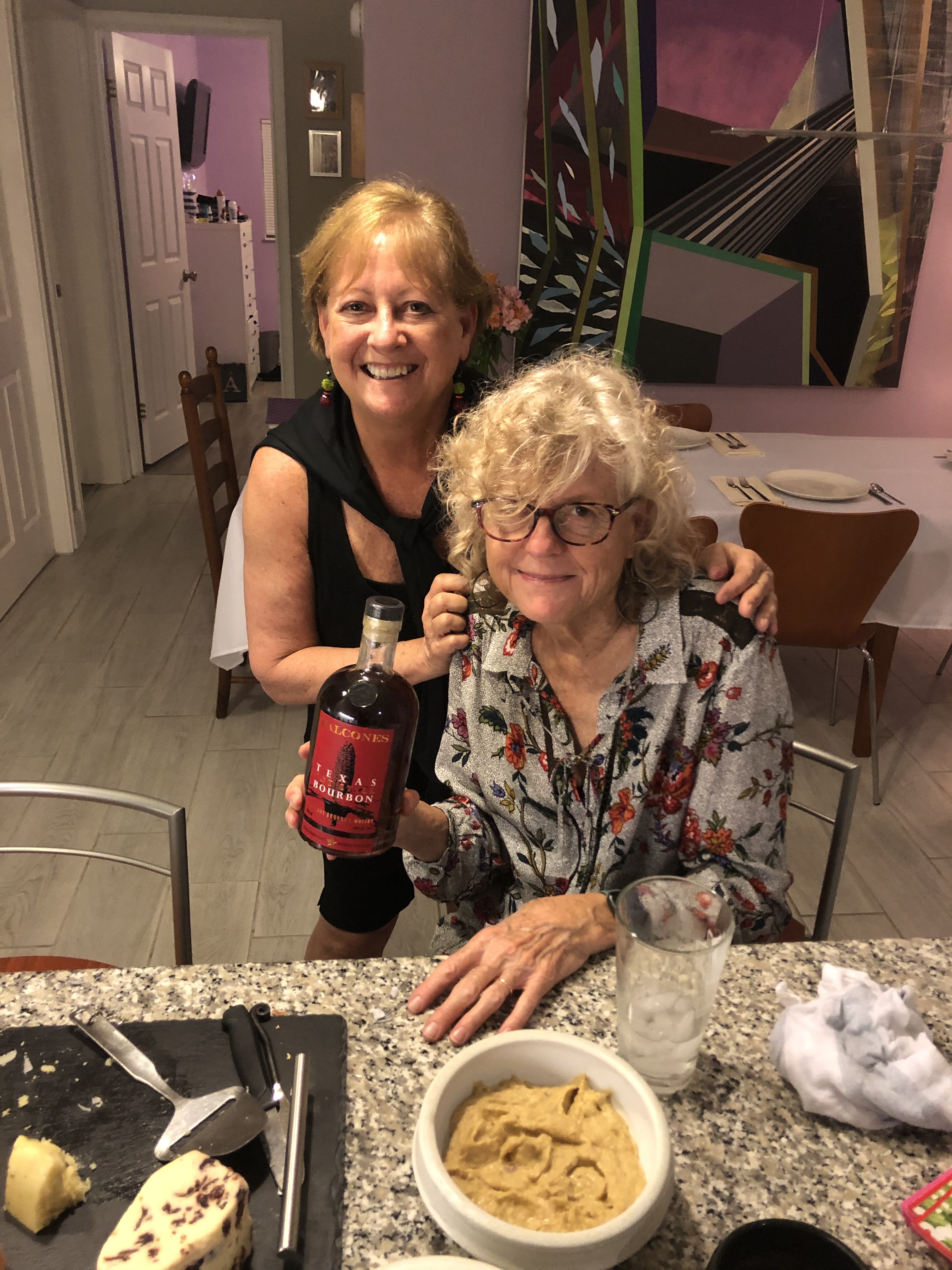
Today, Sissy and I play golf at a par 3 course close to her home in southwest Florida. She uses a hodge-podge set of clubs that she bought at a pawn shop several years ago. I have a real set of clubs, golf shoes and a golf glove. We don’t actually play a full round of golf, nor totally adhere to the real rules of golf. We play best ball and end up not counting beyond 10 if things get really bad. The course has multiple water hazards and we joke about how many balls we lose in those man-made ponds. Sissy usually drinks bourbon, while I’ll have a vodka or a beer. We try to make friends with every other golfer on the course that day, joking about our golf game. Most of them want to join in our reverie.

When I tell people that I love to watch golf on a late Sunday afternoon the response I most often get is “Golf is so boring on TV.” I couldn’t disagree more with that sentiment. To me, it is calm and relaxing and allows a wind-down from the weekend’s activities. It reminds that there are gentlemen in this world who are honorable and kind, and win their reputations through hard work and perseverance.

It has been thirteen years since I lost my father and on every Father’s Day I try to find some way to honor him. Today I went to a driving range, at a public golf course, and hit a bucket of balls. I put on my golf glove, intertwined my fingers exactly the way he taught me, and kept my eye on the ball as I followed the motion of my swing in my shadow.

My golf game? I can hit a nice 8 iron and putt fairly well. A hybrid is my favorite club, and I am still working on perfecting my drive with my Big Bertha.

After the bucket was empty, I went home, and watched the last round of this year’s U.S. Open.

Congratulations Brooks Koepka and “Happy Father’s Day” to fathers everywhere. Take your kids with you to the golf course, if you can. It will place you in the category as one of golf’s greats.

To the greatest golfer I knew-Allen Reid Strange


Hearts, Flowers and a Box of Chocolates

Tags

, , ,


The traditions of Valentine’s Day have long been ingrained in my heart and life and have always included a box of chocolates. As a child, Daddy never failed to buy the ubiquitous heart-shaped box of Russell Stover’s chocolates for Mother on Valentine’s Day. The bow on the box may have changed through the years, sometimes adorned with plastic or paper flowers, but the red, satin-covered, heart-shaped box remained the same. Upon delivery of the box, usually at the end of the day when Daddy walked through the door with sweets in hand, we always knew that we would also share in the treats and a hug. We, of course received our own Valentine treats in the shape of multiple-colored candy hearts which touted the typical Valentine phrases of “Be mine” or “I love you.” But as you might expect, as children, we were definitely more interested in sampling the various shaped chocolates from the red box.


Each year, one simple rule was in play even though we knew exactly what we weren’t supposed to do. “No squeezing the candy to see which filling was contained within and then putting it squeezed-side down back in the box.” Who could blame us for trying? Caramel was everyone’s favorite and if you picked a candy with mocha or strawberry nougat, you were stuck with it; you either ate it or gave it to someone else. With this rule in place, it didn’t us take long to decipher that the candies covered in pink or white were definitely not caramel, and the ones wrapped in foil were more than likely filled with a nut or some sort crème.


Mother was always the first to select, and by her side, smaller sets of hands pointed to the ones we thought were caramel-filled. “Pick that one, it’s a caramel,” was the Valentine cry, even though that declaration may not have always been the most honest-thwarting discovery of a caramel was often the intent of the proffered advice. If you happened to pick a candy that you didn’t like, there was always someone who would jump in and claim the prize and double the pleasure.


Regardless of the filling, one by one the brown paper wrappers were left absent of candy until eventually the containers were empty and the heart-shaped box, discarded.


The tradition of the red, hearted-shaped box of chocolates continued for years, and it wasn’t long before we learned that the caramels were always square or rectangular in shape, the nut fillings were oval or wrapped in foil, and the crème fillings were always round. The mystery of which filling was in which candy became less and less of a mystery and more of an exact science after years of practice and inaccurate selections.


To my surprise, somewhere along the line, my son continued the tradition we had shared with our parents, and I started to find my own box of Russell Stover’s Valentine chocolates on the kitchen table, on my dresser, or in the mailbox when distance between us prevented a personal delivery. It didn’t matter that it probably cost more to mail that box of chocolates than it cost to purchase the box. Like my father, my son has seen to it that a box of chocolates is always present on Valentine’s Day.


Forrest Gump was right. With a box of chocolates you never know what you are going to get. Except for the Strange kids-we knew exactly what was hidden in those chocolates. To this day, square is for caramel, oval is for nut, round is for crème and Valentine’s Day is for love. Celebrate with someone special. I’m off to check my mailbox.


Bad Hair Day

Tags

, , , , ,

The definition of a “bad hair day in the fifties was very different from today’s version. We didn’t have hair salons that offered every possible adventure in hair coloring and styling, which today’s salons offer and charge large amounts of money for sheen and fluff. In the fifties, hair was cut, curled, washed and dried at home and Mother was the resident hair stylist. She had no training, of course, but no one seemed to care. If bangs needed to be cut or hair trimmed, she brought out her trusty scissors-that is, if she could find them-and did the deed.

She was my mother and I loved her of course, but she wasn’t very good at cutting bangs. In fact, she was “downright awful.” All I have to do is look at all my pictures to verify that fact. The pixie cut was all the rage back then (apparently) because in most of my early photos I sport a very short haircut, with even shorter, and more often than not, crooked, jagged bangs—Mother’s signature. Jagged, crooked, uneven, botched-whatever they were-they were definitely not straight. She either had an early case of palsy or she just didn’t know how to cut a straight line. The basic problem was that once she cut them, she couldn’t take back the deed. Sissy and I were stuck with crooked, too short, uneven, awful bangs-for at least the next eight weeks.

I managed to live with the crooked bangs, but the worst of the bad hair days arrived when Mother grew tired of the pixie cut and decided to perm my hair. Sissy was lucky because her hair was naturally curly. Remember, she was the redhead. Me? Fine, brown hair which was straight as an arrow. For whatever reason, Mother decided to experiment with a Toni. That’s what we said back then. “I’m getting a Toni.” The home perm—the calamitous, horribly frightening home perm, the thought of which still gives me shivers to this day.

The infamous Toni Permanent Kit. The square cardboard box was fuchsia and black, and contained all the necessary ingredients to permanently ruin my hair. First there was the wave Lotion, pink plastic curlers (to match the fuchsia of the box), and papers (which resembled the same type of paper used to roll cigarettes or other smoking materials), and step by step instructions.

  • Separate the hair into small sections
  • Cover with the paper
  • Wrap the curler around the paper, making sure the paper remains in place
  • Wrap the hair from its end to the scalp; clasp the curler in place, then soak the rolled hair with the wave lotion.
  • Simple enough, right?

    Simple, yet probably carcinogenic, based on the overwhelming caustic smell of the chemicals.

    The last time Mother gave me a Toni was right before my third grade annual school picture. Each year, the school sent a notice home announcing the date the photographer was scheduled, and Mother always made certain we were dressed in our best clothes, with hair combed, and faces absent of food or toothpaste. That particular year, Mother decided to give me a perm. I may have actually asked for one but who remembers the details. Unfortunately for me, the perm did not go so well. Totally frizzed out and sticking straight up in all directions from my scalp, my hair was fried. Not only did I have thick, unattractive glasses, I had to wear to see one inch in front of me, I now had the worst hairdo at Hebron School. Unruly and horribly frizzy, Mother ended up pulling my hair back from my face using a tortoise shell plastic headband.  Now I looked like an alien who couldn’t see. The photographic results were a disaster. .

    When the proofs came back, I didn’t want any of them, but my parents bought the package as usual. The one 8 x 10 (to display at home), two 5x7s (to send to the grandparents), and multiple wallet-sized photos (to exchange with classmates). I refused to exchange any pictures with my friends and kept the unwanted photos in my desk.

    Mother eventually quit cutting my bangs and perming my hair, and let me grow out my hair into a long ponytail. We began visiting her friend Florence who had a beauty shop set up in her basement, and the days of the frizz were over.

    Back in the eighties, I decided to get a perm for some reason. Curly hair must have been back in style. The results were not much different than back in the fifties—my hair was horribly fried and totally unattractive. It took months to slowly and methodically erase the effects of that perm, and no wave lotion has touched my hair since.

    I still prefer my pixie cut and have come to terms with the fact that my hair is fine and straight and yes, still brown through the magic of other chemicals saturating my head and scalp. Sissy still has that beautiful curly hair and the Toni Company has gone out of business. The rumor is that the chemicals in Toni’s wave lotion damaged the hair.

    Thanks for that update, Sherlock.

    Sassy photoToni home perm<a