• Home
  • About
  • The Fabulous Fifties
  • Gastronomical Delights
  • Entertainment in the Non-Digital Age
  • Memory Keeping
  • Sporting Adventures

growingupstrange

~ The Fifties-A Simpler Time

growingupstrange

Category Archives: Entertainment in the Non-Digital Age

Bad Hair Day

24 Tuesday May 2016

Posted by S. A. Strange in Entertainment in the Non-Digital Age, Memory Keeping

≈ 2 Comments

Tags

bad hair day, cutting banks, home permaent, pixie cut, Toni Permanent, wave lotion

The definition of a “bad hair day in the fifties was very different from today’s version. We didn’t have hair salons that offered every possible adventure in hair coloring and styling, which today’s salons offer and charge large amounts of money for sheen and fluff. In the fifties, hair was cut, curled, washed and dried at home and Mother was the resident hair stylist. She had no training, of course, but no one seemed to care. If bangs needed to be cut or hair trimmed, she brought out her trusty scissors-that is, if she could find them-and did the deed.

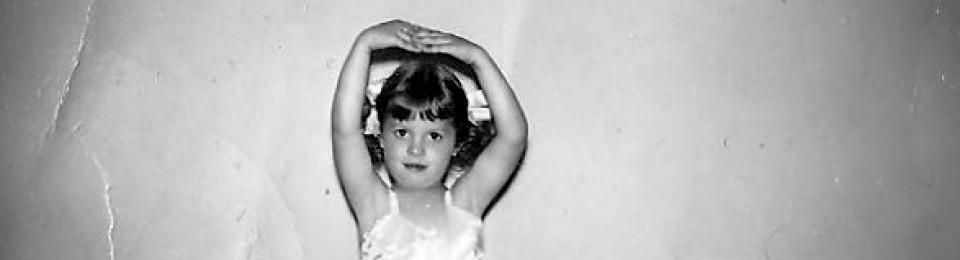
She was my mother and I loved her of course, but she wasn’t very good at cutting bangs. In fact, she was “downright awful.” All I have to do is look at all my pictures to verify that fact. The pixie cut was all the rage back then (apparently) because in most of my early photos I sport a very short haircut, with even shorter, and more often than not, crooked, jagged bangs—Mother’s signature. Jagged, crooked, uneven, botched-whatever they were-they were definitely not straight. She either had an early case of palsy or she just didn’t know how to cut a straight line. The basic problem was that once she cut them, she couldn’t take back the deed. Sissy and I were stuck with crooked, too short, uneven, awful bangs-for at least the next eight weeks.

I managed to live with the crooked bangs, but the worst of the bad hair days arrived when Mother grew tired of the pixie cut and decided to perm my hair. Sissy was lucky because her hair was naturally curly. Remember, she was the redhead. Me? Fine, brown hair which was straight as an arrow. For whatever reason, Mother decided to experiment with a Toni. That’s what we said back then. “I’m getting a Toni.” The home perm—the calamitous, horribly frightening home perm, the thought of which still gives me shivers to this day.

The infamous Toni Permanent Kit. The square cardboard box was fuchsia and black, and contained all the necessary ingredients to permanently ruin my hair. First there was the wave Lotion, pink plastic curlers (to match the fuchsia of the box), and papers (which resembled the same type of paper used to roll cigarettes or other smoking materials), and step by step instructions.

  • Separate the hair into small sections
  • Cover with the paper
  • Wrap the curler around the paper, making sure the paper remains in place
  • Wrap the hair from its end to the scalp; clasp the curler in place, then soak the rolled hair with the wave lotion.
  • Simple enough, right?

    Simple, yet probably carcinogenic, based on the overwhelming caustic smell of the chemicals.

    The last time Mother gave me a Toni was right before my third grade annual school picture. Each year, the school sent a notice home announcing the date the photographer was scheduled, and Mother always made certain we were dressed in our best clothes, with hair combed, and faces absent of food or toothpaste. That particular year, Mother decided to give me a perm. I may have actually asked for one but who remembers the details. Unfortunately for me, the perm did not go so well. Totally frizzed out and sticking straight up in all directions from my scalp, my hair was fried. Not only did I have thick, unattractive glasses, I had to wear to see one inch in front of me, I now had the worst hairdo at Hebron School. Unruly and horribly frizzy, Mother ended up pulling my hair back from my face using a tortoise shell plastic headband.  Now I looked like an alien who couldn’t see. The photographic results were a disaster. .

    When the proofs came back, I didn’t want any of them, but my parents bought the package as usual. The one 8 x 10 (to display at home), two 5x7s (to send to the grandparents), and multiple wallet-sized photos (to exchange with classmates). I refused to exchange any pictures with my friends and kept the unwanted photos in my desk.

    Mother eventually quit cutting my bangs and perming my hair, and let me grow out my hair into a long ponytail. We began visiting her friend Florence who had a beauty shop set up in her basement, and the days of the frizz were over.

    Back in the eighties, I decided to get a perm for some reason. Curly hair must have been back in style. The results were not much different than back in the fifties—my hair was horribly fried and totally unattractive. It took months to slowly and methodically erase the effects of that perm, and no wave lotion has touched my hair since.

    I still prefer my pixie cut and have come to terms with the fact that my hair is fine and straight and yes, still brown through the magic of other chemicals saturating my head and scalp. Sissy still has that beautiful curly hair and the Toni Company has gone out of business. The rumor is that the chemicals in Toni’s wave lotion damaged the hair.

    Thanks for that update, Sherlock.

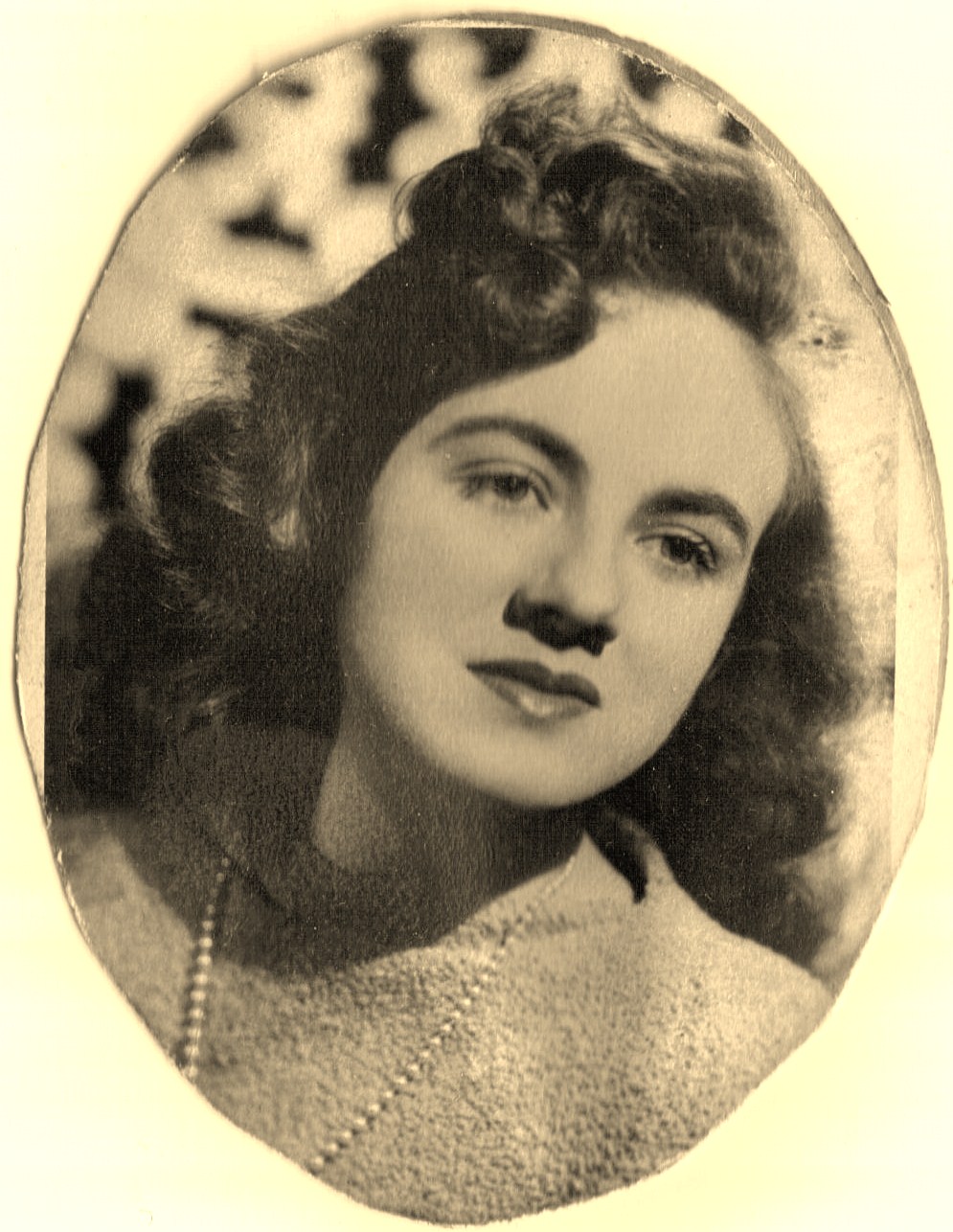
    Sassy photoToni home perm<a

    Summer Boredom

    21 Sunday Jul 2013

    Posted by S. A. Strange in Entertainment in the Non-Digital Age

    ≈ Leave a comment

    Tags

    clay sculpting, Hebron Elementary School, Popsicle, potholders made on a loom, summer boredom

    With the heat and humidity of summer came boredom at the midpoint of our vacation from school. I am certain Mother’s nerves were frayed and our constant pleas to be entertained weakened her parental shield of patience. Accustomed to the daily schedule school offered, boredom and time on our hands caused sibling squabbles, mischievous adventures and lazy afternoons spent whining and complaining. Our favorite refuge from inactivity and unrest was the summer recreational program sponsored by the local school district. The morning or afternoon sessions allowed us and all the neighborhood kids to escape our mothers for several hours a day, for which I am certain they were grateful.

    In preparation for the trip to school, we carefully tucked our allotted coins in a vinyl, oval shaped coin purse (slit down the middle for entry by the coin) and headed for the dusty, exciting adventures that awaited us on the playground of Hebron school. Either walking or riding our bikes, we only traveled a half-mile to reach the school and no one thought twice about our going alone on the half-mile journey. In the late fifties, everyone considered walking to school to be safe and routine. During the school year, the route was a straight shot down Congress Avenue with patrol boys and the school guard waiting to guide us safely across Lincoln Avenue each morning. All along the route, parents escorted their children out the door, mentally noting and checking on all the other children who passed by each morning. In the summer, there was no school guard but our favorite teacher, Miss Whitman, waited for us and the other kids to arrive for the daily arts and crafts, games and treats.

    Tall and commanding, merely because of her height and not her demeanor, Miss Whitman, uncharacteristically wore shorts or pedal pushers (aka Capri pants), a whistle around her neck, and her ubiquitous glasses during these summer sessions. She skillfully managed all the kids who arrived and split her time between refereeing the ad hoc softball game, watching us travel up and down on the teeter-totter or teaching arts and crafts. Occasionally other teachers helped, but many days she managed the crowd of kids by herself.

    When we arrived at the school, we selected our activities for the day based on how much money Mother had given us. Some days we just played games because we had very little to spend, and saved our small allotment for a bottled soft drink or an ice cold Popsicle to help stave off the heat and sweat of the day.

    Outdoors, we played baseball, marbles and jacks. We jumped rope or swung on the swings, jumping off when we reached the apex of the rotation, seeing who could land the farthest away. Tag and kickball or just sliding down the slides, we exhausted the options available to us as well as exhausted our small, toned and fit bodies.

    When the heat became unbearable, we retreated indoors to the classroom that was converted into the arts and craft room for the summer. Indoors, we made cloth potholders on a loom or plastic braided key chains, carefully weaving the materials under her guidance and instruction. We played with clay, sculpting shapes, tiny replicas of animals and small fortresses to prepare for battle. Imagination and creativity personified. Small hands remained busy under the guise of a caring teacher.

    I don’t know how many potholders Sissy and I weaved during those summer tromps up to school, but Mother and Daddy used them religiously in the kitchen, never complaining about the fact that they weren’t very good at protecting their hands against the heat of an iron skillet. The woven loops of cloth caught on fire if placed too close to the oven’s heating elements, and being made of 100% cotton and not flame retardant fabric, this happened frequently. Neither parent complained. The plastic braided key chains probably ended up in a drawer somewhere, forgotten and eventually discarded. We didn’t carry keys and the braided chains were either too long or too short to be functional. Colorful, but not very functional

    After several hours of play, Sissy and I depleted, sweaty and dusty headed home. Mother greeted us at the door, asked about our day and graciously accepted our gifts. We never knew how she entertained herself in those few hours without us, but my guess is, she enjoyed the brief respite away from her girls with her nose in a book; traveling to her own adventures from the boredom of summer. I wonder if children today still make potholders for their mothers. I think I will check Amazon and see what I can find.

    Drive-In Theatre: The Fifties

    14 Sunday Jul 2013

    Posted by S. A. Strange in Entertainment in the Non-Digital Age

    ≈ Leave a comment

    Tags

    Dog of Flanders, drive-in movie, Drive-in theatre, Kool-aid, Old Yeller, Popcorn, Shane, Sunset Drive-In Evansville

    celeb_movie_alan_ladd_shaneThe iconic drive-in theatre of the fifties has largely disappeared from the landscape of America, replaced by mega theatres, surround sound, gourmet meals and alcoholic beverages. Notwithstanding the relative comfort of today’s movie going experience, nothing can replace the authenticity of the Saturday night drive-in movie. Evansville boasted four drive-in theatres across the city from east to west. While we were fortunate to have two drive-in theatres in close proximity to our house, the premier outdoor theatre was Sunset Drive-in located north on Hwy 141 as one traveled out of town towards Terre Haute. The theatre’s multi-colored neon sign blinked on and off announcing its current showing and enticed passing cars to turn into the driveway, which led to a ticket booth where the price of admission included all the occupants within the car. A bargain at any price considering the cost of entry into any of today’s blockbuster or lackluster movies.

    The outdoor theatre was not fancy, but rather simple like the times and the people who climbed into their sedans and station wagons to experience Hollywood at night and out of doors. A neon sign, a ticket booth, a gigantic screen and rows and rows of metal poles holding two speakers each, accommodating between 500 and 700 cars, constituted a drive-in movie. A single story concrete building usually rested in the middle of the parking area, which housed the projection room, the concession stand and the public restrooms.

    On a hot, humid Saturday night when families wanted to escape the indoors and enjoy a night under the stars, any of those drive-in theatres held a thousand people in the grip of the action and cinematography on the outdoor screen. The drive-in was one of the largest gathering of parents, children, teenage paramours and groups, listening to the sounds of cinematic dialogue mixed in with the laughter, cries and whispered conversations of Middle West families.

    The anticipation of going to the drive-in was unbearable as we waited for the sun to begin its descent behind the horizon. We loaded ourselves into the care with various accoutrements, which included a picnic dinner or just popcorn and Kool-aid. The not so healthy concession stand offered hamburgers, hot dogs, French fries, ice cream and candy of all types for sale, and on occasion our parents gave us money to buy one treat. The animated advertisements for the available snacks and food flashed repeatedly across the screen and succumbing to the constant begging for a greasy hamburger or chemically laden hot dog was probably easier than listening to our incessant and annoying pleas. If allowed, we ceremoniously slathered the delicacy with catsup, mustard, chopped onions and pickle relish from the condiments table, ultimately hiding the taste of the original food. Instead of a hot dog, sometimes we bought cotton candy, ice cream or a NEHI orange to wash down whatever else we ate. Mostly we devoured our own freshly popped and buttered corn, packaged in individual brown paper, lunch-sized bags. We drank Kool-aid poured into paper Dixie cups filled with ice, and our lips and tongues remained stained with the color of whatever flavored Kool-aid Mother prepared.

    Even though the movie couldn’t start until the sun had completely set, we didn’t wait until then to leave. We arrived early enough to find just the right spot, not wanting to park too close or too far from the screen. Teenage couples usually grabbed those spots quickly, desiring privacy away from the watchful eyes of parents and the curiosity of small children. Daddy preferred to park somewhere in the middle, not too far from the concession stand but not right next to it either. The frequent trips to the bathroom were difficult to navigate in the dark, but being too close was noisy and distracting. The cone-shaped beam of light from the projector, exiting the building toward the screen, helped provide enough lighting and a point of reference for the parent whose turn it was to make the trip to the restrooms. Even in the fifties, parents did not allow their children to go to the restroom alone. Safety first was a parent’s creed then, as it is now.

    As we drove slowly into the large parking lot, the crunching sound of the tires on the gravel intermingled with the sounds of adults and children who had already arrived and had exited to find their spot in front of, on top of, or beside the cars. The cars, one by one, lined up between the metal poles that housed the rectangular speakers, traversing the small mound of gravel, which elevated the car’s front end and allowed for better screen viewing.

    Once we arrived, Daddy positioned the car onto the gravel mound, pulled the emergency brake and turned off the car. We had also brought folding lawn chairs and a blanket or two because no one stayed inside the car during the movie. Sitting on the gravel was not only dangerous, but extremely uncomfortable, so as we tumbled out of the car and hurried to the front of the car, Mother spread the blankets on the hood of the car. Daddy lifted us up onto the car’s metal fender and from that position, hoisted us onto the hood. Sitting with our legs stretched out in front of us, we leaned against the windshield, settling in to watch cartoons streaming across the screen. Road Runner, Daffy Duck, Porky Pig-these characters were the pre-show entertainment and not to be missed.

    Daddy positioned the speaker on the half-raised car window and turned up the volume. Every car’s speaker projected the sounds, which accompanied the action on the screen, and early surround sound permeated across the humid evening air. If we were lucky, an occasional cool breeze blew through the drive-in and slightly relieved the heat of our sweating backs and necks, which rested against the glass windshield.

    We saw Old Yeller, Shane, and Dog of Flanders at the drive-in; three classic movies of the fifties. Fess Parker as Davy Crockett graced the screen in his coonskin cap and buckskin clothes on multiple occasions. Walt Disney entertained us endlessly, and I am certain that Bambi took his lesson from Thumper on the downside of malicious gossip, while I reclined on the hood of Chevy or Ford. Audie Murphy, one of the most decorated soldiers of World War II, starred in his own autobiography, To Hell and Back, with bravery and determination, albeit not very good acting. And, Tinkerbelle. Well, she flew through the Evansville nights on her journey through Neverland and the Magical Castle, to the amazement of a generation of small children with sleepy eyes and popcorn filled-stomachs.

    Today, I pay ten dollars to see a movie and more than that to buy popcorn. The special effects are amazing and there are few rules about violence, gore and the privacy of bedrooms. Everyone is immune to the language and little is required of one’s imagination. No theatre allows you to bring in your own popcorn, but I do manage to sneak in Twizzlers now and then. The seats are stadium-grade and talking and texting is verboten. Admonitions of such behavior fill the screen as I settle into my seat and expect to be entertained.

    Even so, I often remember those carefree, noise-filled nights at the drive-in with my family. I hear the scratchy sound of the actors’ voices coming through the speakers, the smell of cigarettes in the open air, and the sound of babies crying themselves to sleep while two young parents try to catch a movie without having to pay a babysitter. I hear the crunch of the gravel under the weight of people passing our car on their way to the concession and the hushed whispers of parents talking to their children trying not to disturb the other movie patrons. And, if I close my eyes and concentrate on nothing more than the past, I can still see Alan Ladd riding off into the sunset on the Wyoming range, leaving Brandon De Wilde, as he must, with that long remembered pleading voice echoing in my head. “Shane! Shane! Come back Shane!”

    Double Blades on Frozen Ponds

    01 Saturday Dec 2012

    Posted by S. A. Strange in Entertainment in the Non-Digital Age

    ≈ 2 Comments

    Tags

    double bladed ice skates, frozen ponds, ice skates for Christmas, Indiana winters, Woodmere Asylum

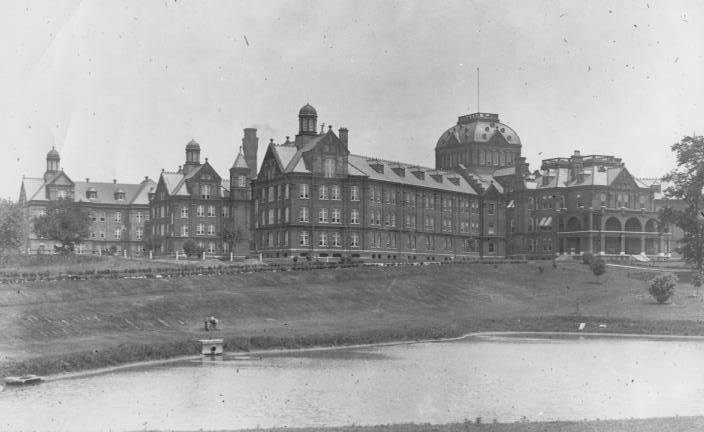
    Double blades graced the first pair of skates I owned-owned in the sense that they were hand-me-down skates from a neighbor down the street. The two blades on each skated helped manage the difficulty of balancing on ice, moving not so gracefully forward on the ice or remaining upright. These skates sported red leather flaps which wrapped across the top portion of my feet  with a leather buckle strapped across my ankles, and were similar to the roller skates of the day. They were designed specifically for young children, or first time skaters, such as me. The Pond at Woodmere Asylum

    Most of the kids we knew ice-skated as skating was a typical outdoor adventure in the cold, Indiana winters of the fifties. When the temperatures reached the low 30s and 20s, and the local ponds and lakes froze over, we found any piece of frozen water we could glide and slide across, either gracefully or more likely awkwardly with flailing limbs. In the alleys between the houses in our neighborhood, there were often long strips of frozen water from a recent rainstorm that afforded us a small opportunity to skate, but we always preferred the frozen ponds of the Woodmere Asylum.

    Unlike during the summer, when our parents forbade us to enter the cornfields owned by state mental hospital (which sat behind our house) no such restrictions were enforced during the winter. During those icy cold winters, we skated on the frozen surfaces sitting in front of the imposing structures of the looming, architecturally beautiful buildings. The hospital openly allowed us to skate on the ponds and there was no charge to skate or anyone to supervise the activity. There were no signs posted to warn us of thin ice, and the frozen ponds were open for business-all day or any day, with the knowledge that we skated at our own risk.

    The temperatures needed to hover around 30 degrees for at least a week, with a forecast of continued freezing weather, before parents even considered letting us skate on the ponds. The adult in charge, who was usually Daddy, carefully checked the ice for cracks or any weaknesses, before he allowed any of us to step foot on the surface, and no one was allowed to skate solo. We always had a partner and it was not unusual to skate hand in hand with Sissy or a friend.

    If there was any indication the ice was not rock solid, we returned home until the temperatures remained cold enough to guarantee a skating outing in the next day or two.   When the time was right and armed with hats, gloves, long pants and skates slung over our shoulders, Daddy or one of the other parents bundled us up once again and transported us the short distance to the ponds of Woodmere.

    Some of the mental patients had access to the grounds and could be seen walking with caretakers or family members throughout the property. We generally avoided any contact with them, but occasionally they came and stood by the side of the pond and watched us skate or stared vacantly into space. None of them bothered us and besides, we had our protector watching over the ice, our audience and us.

    We took advantage of this open availability and skated as often as possible, because once the winter ended and spring arrived, the restrictions on being allowed on hospital property resurfaced, and our travels to that world ended.

    I only saw my father skate on one occasion when he borrowed skates from one of the older teenage boys in the neighborhood and skated with us. In spite of his athletic prowess, he failed miserable at skating. He wobbled crazily on the single blades and after that first fall to the ice, he decided skating was not in his future. After the experience of falling, he watched from the edge of the pond, making certain his children and the other kids were safe and free from danger of any kind.

    I graduated from double blades after that first year to my very own pair white leather skates with a single blade. Each Christmas thereafter, ice skates made the list to Santa. I didn’t always find those new skates under the tree, so I to be content with Sissy’s hand-me-down skates, as there was a perfectly good, used pair of skates that fit me already.  At a certain point in time, our skate sizes matched, and I soon found my own new pair of skates under the Christmas tree.

    I cherished those new skates and painstakingly dried the blades after coming off the ice. With a single, careful swipe between two fingers, I removed the excess liquid from the blades and then placed the rubber blade guards on each blade, to keep them sharp and to protect myself from cuts. Daddy kept them polished, just as he did with all of the shoes of the house,  and afterwards hung the skates by their shoelaces in the utility room until the next snowfall or week of icy temperatures.

    Fortunately, there were never any serious accidents at the ponds and other than bruised egos, sore bottoms and skinned hands, we skated accident free for many winters. The ice itself was rough and uneven and the ability to maneuver the imperfections in the ice helped hone our individual skating skills. Skating forwards and backwards, around the rink in pairs or in a group, we soaked in the freshness of our youth and the cold, winter air.

    Eventually, a large indoor stadium was built to accommodate basketball games for the University of Evansville, the annual Shrine Circusindoor skating and other events. We traded our frozen ponds for cleaner, smoother ice and a slightly warmer environment. Daddy now sat in a stadium seat to watch us and hot chocolate was available out of a vending machine, but we still came home to Mother with rosy cheeks, cold bottoms, scuffed up skates and bruised egos.

    I skated throughout my childhood and often fantasized about skating in the middle of the rink, twirling effortlessly in a beautiful sparkling costume, mesmerizing the crowd with my skill and grace. What I actually ended up doing was making frequent trips to the ice rink at five and 6 AM with my son and his friends, for hockey practice and games. I took my hot chocolate with me and proudly watched from the sidelines as he beautifully glided across the ice, both forwards and backwards, maneuvering between the other boys on the ice and gracefully striking the hockey puck with finesse and accuracy as it sailed into the net.  That was more special to me than any rhinestone costume or the cheers of an admiring crowd.

    Whether on the smooth surface of today’s ice rink, or on the natural bumps and imperfections of the weather-induced frozen terrain of Woodmere’s ponds, slipping, falling and conquering the ice was the epitome of life in the fifties-simple, joyful and natural.  Entertainment in the non-digital age.

    Jarred in Indiana

    26 Wednesday Sep 2012

    Posted by S. A. Strange in Entertainment in the Non-Digital Age

    ≈ Leave a comment

    Tags

    jarred bugs, Lightning bugs, Woodmere Asylum

    We weren’t cruel and inhumane-we were curious children of the fifties looking for entertainment  on warm, humid summer nights right before the sun went down in the waning dusk of the day. Most nights we hunted for lightning bugs illuminated in all their wonder as they flew across the invisible borders between houses crisscrossing from front to back as we chased them mercilessly. We caught them in our hands and carefully placed them in glass jars for safe (??) keeping. We held magic and wonder in our hands as we watched the intermittent twinkling light that leaked between our tightly closed fingers.

    But before the chase, our first challenge was finding jars with matching lids. Mother was anything but organized, and we often searched the discarded trash, the kitchen cabinets and under the sink to find a jar. When that search revealed no finds we looked in the refrigerator for that jar of jelly or mayonnaise that was nearly empty. We tried not to get caught taking jars out of the refrigerator, but we were probably not as successful at that chicanery as we thought.  The lingering smell of mayonnaise in a recently washed out jar was a telltale sign that we had pilfered a jar still containing food. The smell was probably a bit of a put off for the captured creatures as well, but we did not care what lightning bugs thought, and besides, they might even have liked their odoriferous prison!

    After finding just the right jar, we punched holes in the metal lid. We, meaning Daddy. He was the keeper of the knives and other sharp instruments so he was the one who  carefully positioned the knife on the lid, placing the palm of his hand on the top of the knife handle and pounded one hand with the other. He usually punched four or five holes in the lid, which generally allowed enough oxygen to enter the glass-enclosed space to keep the bugs alive. Then, we were ready to hunt.

    It wasn’t difficult to track or trap the bugs because there was an abundant supply on those summer nights. After sunset, they swarmed our back yard, which was adjacent to the forbidden cornfields-property of the local state mental hospital. Oh, I forgot to mention. Our property backed up to the state mental hospital-referred to as Woodmere Asylum in the old days. Definitely more about that later.

    We ran through the neighbors’ front and back yards with our small hands poised to capture the bugs as they lit our way through the darkness. Our child’s play was about competition in the end, as we always wanted to know who caught the most bugs.  Sometimes the competition was just between Sissy and me and at other times, there was a crowd of kids running through the neighborhood. Three girls lived two doors down, another two girls and a boy lived further down the street, and five boys lived right next door. With all of us involved in the sport, the cacophony of noise we created, punctuated the darkness which surrounded us on our search.

    Once we captured the bugs, there was little left to do. We watched the creatures “turn on-turn off” in their temporary homes and when we tired of the light show, we released them into the night. We never considered the physical or psychological harm imposed on our captives, and we considered the adventure humane, because in the end, we always gave them their freedom. It was an early version of catch and release.

    Woodmere Asylum

    As they flew from their glass prisons, the twinkling lights moved into the distance. They floated above the flowers and vegetables of the garden like crown jewels, and moved quickly away from our property disappearing into the forbidden cornfields. It was a fantastical adventure. In our uneducated knowledge of lightning bugs, we imagined that perhaps their minds altered during captivity and they traveled through those cornfields and into the world of the almost forgotten inmates of the asylum, joining them in their fantasies and hallucinations. Childish thoughts or imaginations gone wild.  We’ll never know. The lightning bugs carried their secrets with them as they joined the other captives who were jarred in Indiana.

    Card Sharks

    13 Thursday Sep 2012

    Posted by S. A. Strange in Entertainment in the Non-Digital Age

    ≈ 1 Comment

    Tags

    My very own Queen of Hearts

    While other children were doing puzzles and cutting out paper dolls, we were learning how to be card sharks. We played those typical childhood games and owned baby dolls, but Mother’s passion was cards. And, we didn’t just play cards; we devoured them. The three of us sat on the floor of our apartment and learned almost every card game in the book from Mother before we turned five.  We started with Go Fish and gradually graduated to Crazy Eights, Gin Rummy, Canasta, Poker, Solitaire, War and Hearts.

    We only needed to know two colors-black and red and the numbers two through ten. We learned about the four symbols-heart, spade, club, diamond; the three face cards-king, queen, jack; and the ace in all of its splendor. And, when we had accomplished the basics in the simpler games, we learned the most revered game of all-Bridge-the quintessential card game of adults.

    Sitting at the card table, hauled out only for company or for a bridge game, my sister and I, barely tall enough to reach the floor with our feet, sat in the matching folding chairs next to each other. Our parents rotated sitting across from us as partners.We learned to count the points in each hand and remember which cards we played. We learned to keep score, strategize and bluff. Poker was not the only game that relied on bluffing and as we improved, we often bluffed our way to victory, or lost trying.

    Our hands were almost too small to hold the thirteen cards of a bridge hand, but somehow we managed and initially with desperation and eventually with practice, we counted our points without our fingers, or pencil and paper, to help tally the total number held in our hands.

    “Don’t let anyone see your cards,” Mother repeatedly said at each setting. One innocent look at the bared cards could be just enough to tip the outcome of the game. Seizing an opportunity to cheat, whether on purpose or not, was unacceptable. Bridge wasn’t just a game of skill, but one of honor as well.

    The bridge lessons were simple and precise. The ace was worth 4 points; the king was worth three, the queen-two, and the jack-one. Clubs were a minor suit; spades were a major suit. Clubs, diamonds, hearts, spades was our mantra. We had to memorize this sequence from least to most valuable. This basic knowledge laid the groundwork for bidding, playing and scoring. It was the one rule we had to remember without exception.

    “Count your cards. Get your trumps out. Don’t forget about transportation,” Mother and Daddy repeated each time we played so the rules became ingrained in our minds as naturally as we learned one plus one, equals two.  Little did we know that we were being schooled in higher cognitive thinking that would prove useful as adults? There was mathematics, short term memory, strategic positioning, collaborative sportsmanship and best of all in my mind, spirited competition.

    This wasn’t typical child’s play, but the careful guidance of parents who provided a value beyond the mere setting down of cards on a table. We learned how to play and how to win, and at the same time, we relished in and benefited from the undivided attention of the two people we loved the most. Mother and Daddy argued frequently over how to approach the lessons, but it was often more good-natured than mean-spirited. The arguments never ended in a real battle of words, but rather demonstrated a shared battle of wits and talent, ending in victory or defeat.

    Both of them played throughout their lives, but Mother was the more serious and dedicated bridge player of the two and went on to become a Life Master. Few of her opponents or partners matched her intelligence or skill at the bridge table. Charles Goren would have been proud.

    Throughout my childhood, I listened to her on the phone recall the previous night’s game with her partner. Sitting at a table with the black earpiece attached to the side of her head, scorecard in hand,  they reviewed every hand, remembering in detail who held which card, who played which card and who won that particular trick. Her skill at almost total recall was an incredible display of genius. Her ability to take a less than stellar hand and win was unparalleled. “You play the hand you are dealt,” she often said. I am certain she meant it to apply to all of life’s experiences, both good and bad.

    I was never that good. I played competitive party bridge with friends throughout college and now.  Party bridge is not necessarily for the serious, but the duplicate tournament bridge played by my Mother played, was the real deal.

    Now at the bridge table, my friends and I laugh a lot and share our tales of joys and woe. We eat, drink and play throughout the evening, until one of us declares, “This is my last hand. I have an early meeting tomorrow.” At the end of the evening, we acknowledge the winner with a small gift, culminating in the delicious combination of friendship and sport that has been ours. At times, we salute Mother when one of us made an all, but unmakeable bid.

    “Your Mother would be proud,” one of them says. “You played that great.” I smile in proud response. For me, it is not the skill that I treasure, but the gift of love that I received at the bridge table.  The time, the patience and the tenacity with which she taught me a complex and difficult game was uncommon, yet common at the same time.

    Occasionally, when I am fortunate enough to have been dealt what is referred to as a beautiful hand, the hand that matches perfectly with that of my partner’s, and I make that ultimate and rare grand slam by taking all thirteen tricks, I think of my parents,
    particularly my Mother, and I say in salute, “Thank you, Mother. Thank you for being my very own Queen of Hearts.”

    When my Mother died, my brother, who arrived later in her life and never learned to play bridge, was in charge of the inscription on her gravestone. We decided that we would have the symbols of the card suits inscribed there. Not realizing there was a certain order in place for the listing of those suits, my brother randomly listed the suits. It was not until I visited my mother’s grave for the first time after her death that I realized the inscription was in the wrong order. No clubs, diamonds, hearts spades, but a completely wrong order. I laughed and thought, Mother would literally roll over in her grave if she saw the mistake, but I took comfort in knowing that if somehow she knew the mistake was made, she would know that it had not been me.  Clubs, diamonds, hearts, spades. Ingrained. Ingrained. Ingrained.

    Growing Up Strange

    Recent Posts

    • The Magic of Christmas
    • Cheering for Life
    • Mothers and Daughters
    • In Remembrance-Veteran’s Day
    • Dr. Howard, Dr. Fine, Dr. Howard!

    Archives

    • December 2025
    • October 2025
    • August 2025
    • November 2023
    • October 2021
    • March 2021
    • October 2020
    • November 2018
    • June 2018
    • February 2017
    • May 2016
    • October 2013
    • July 2013
    • June 2013
    • May 2013
    • April 2013
    • March 2013
    • January 2013
    • December 2012
    • November 2012
    • October 2012
    • September 2012

    Categories

    • Entertainment in the Non-Digital Age
    • Gastronomical Delights
    • Memory Keeping
    • Sporting Adventures
    • The Fabulous Fifties

    Growing Up Strange

    Tweets by sassystrange50

    Enter your email address to follow this blog and receive notifications of new posts by email.

    Join 40 other subscribers

    Blog at WordPress.com.

    • Subscribe Subscribed
      • growingupstrange
      • Join 40 other subscribers
      • Already have a WordPress.com account? Log in now.
      • growingupstrange
      • Subscribe Subscribed
      • Sign up
      • Log in
      • Report this content
      • View site in Reader
      • Manage subscriptions
      • Collapse this bar
     

    Loading Comments...